

Why Team Building Matters Even More in Today’s Economic Climate
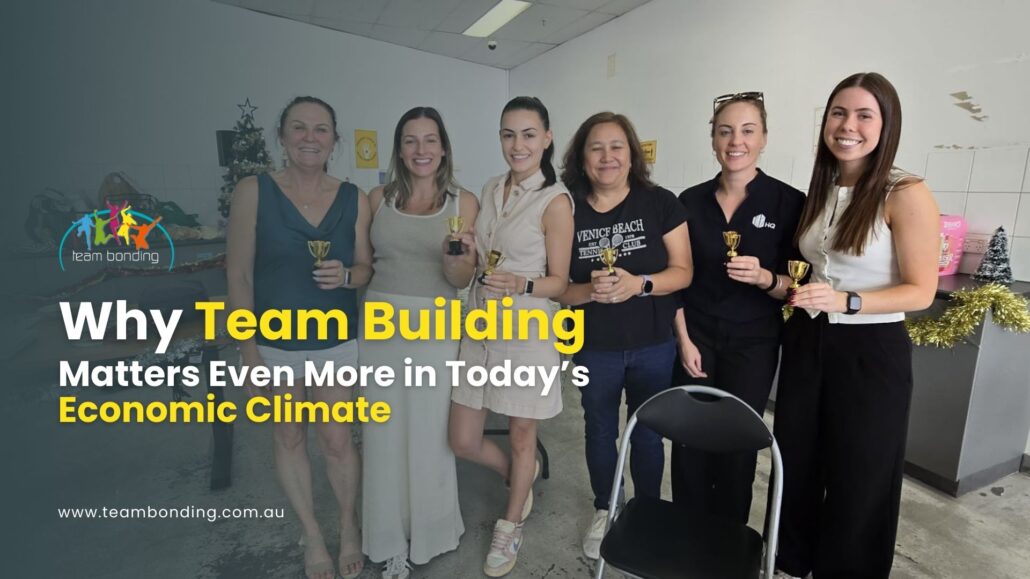
Economic uncertainty changes how businesses think. Budgets tighten, priorities shift, and leaders are asked to do more with less. In times like these, many organisations instinctively reduce spending on anything that looks “non-essential.”
Team building is often one of the first things questioned. But here’s the reality: during financial pressure, people pressure increases. And when people pressure increases, culture, communication and performance matter more not less.
Forward-thinking organisations understand that strategic team building isn’t a luxury line item. It’s a stability tool. It strengthens teams, protects productivity and helps businesses navigate uncertainty with confidence.
The Economic Climate Is Affecting Teams — Not Just Balance Sheets
When the economy tightens, employees feel it.
Even if jobs are secure, uncertainty can create stress, distraction and disengagement. Teams may experience:
- Increased workload without increased resources
- Burnout and fatigue
- Reduced collaboration
- Anxiety about performance and outcomes
- Lower morale and motivation
- Communication breakdowns under pressure
These are not small cultural issues. They are operational risks. A disconnected team is slower, less creative and more prone to mistakes exactly what organisations cannot afford during challenging financial periods.
Team building directly addresses these risks by strengthening the human infrastructure behind business performance.
Team Building Is a Productivity Strategy, Not a Perk
Modern team building isn’t about taking a day off work. It’s about improving how work gets done.
Well-designed team experiences reinforce:
- Clear communication under pressure
- Problem-solving and adaptability
- Trust between colleagues
- Leadership development
- Efficient collaboration
- Accountability and shared goals
These are the skills that help teams perform during uncertainty.
When people understand each other better, they resolve conflict faster. When trust is strong, decisions happen quicker. When communication improves, projects move forward with fewer delays.The return isn’t abstract it shows up in daily operations.
Financial Pressure Makes Culture a Competitive Advantage
During economic downturns, companies compete harder for fewer opportunities. The organisations that maintain strong internal culture often outperform those that cut people-focused investment entirely.
Why?
Because engaged teams:
- Stay focused under pressure
- Retain top talent longer
- Deliver better client experiences
- Adapt faster to change
- Support each other through workload spikes
Replacing skilled employees is expensive. Burnout and turnover quietly drain budgets. Investing in team connection reduces hidden financial losses that don’t appear on a spreadsheet until it’s too late.
In uncertain markets, culture becomes a measurable business advantage.
Smart Team Building Can Be Scalable and Cost-Conscious
At Team Bonding, we create customised team building experiences tailored to your team’s size, goals, and energy level. Whether you’re looking for high-energy challenges, strategy games, or creative workshops, we deliver experiences that:
- Strengthen communication and collaboration
- Build trust and problem-solving skills
- Leave lasting memories for your team
Explore our events today: www.teambonding.com.au
Stability Starts with Strong Teams
Economic conditions will always fluctuate. Teams that learn how to navigate challenge together create organisational resilience.
When employees feel connected, supported and aligned with shared goals, they bring more energy to their work — even during uncertain times.
Businesses cannot control the global economy. But they can control how prepared their teams are to face it.
Team building is not about escaping reality. It’s about equipping people to perform inside it.
Frequently Asked Questions
Yes — when designed strategically. Team building reduces hidden costs like turnover, burnout and poor communication. These issues quietly drain productivity and budgets. Investing in people strengthens operational stability.
Absolutely. Smaller teams often feel economic pressure more directly. Even short, focused experiences can improve communication, trust and efficiency, creating immediate performance benefits.
Consistency matters more than scale. Regular, targeted experiences — even quarterly or biannually — help maintain connection and momentum. Long gaps between engagement can lead to disengagement.
Indirectly, yes. Stronger teams work more efficiently, collaborate better and retain talent longer. These factors directly impact productivity, client satisfaction and operational costs.
Programs focused on communication, problem-solving, adaptability and leadership development deliver the highest return. Experiences should align with real workplace skills, not just entertainment.
It may look responsible short term, but it can weaken long-term performance. When pressure increases, teams need stronger connection and support — not less. Eliminating people investment can create larger hidden costs later.